
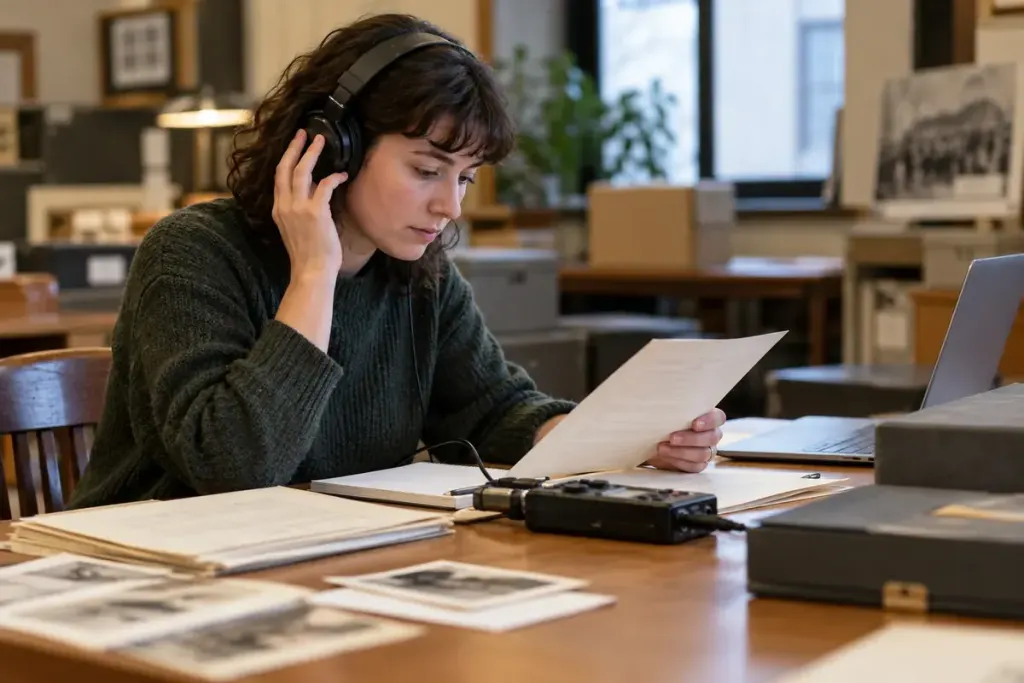
A speaker names a street just as a bus passes the recording location. The transcriber thinks they recognise the name, but cannot hear it clearly. Writing the likely name without a marker would make the finished transcript look more certain than the evidence.
A useful transcript lets later readers find the uncertain passage and understand what the transcriber did. That requires a small, consistent notation system agreed before the whole recording is processed.
Leave a route back to the audio
Mark an unclear section with a timestamp and a neutral label such as “[unclear, 12:34].” If project rules permit a tentative reading, distinguish it visibly from confirmed speech. Keep the original recording unchanged.
Use the same approach throughout. One transcriber should not use brackets for editorial additions while another uses them for spoken words. A short conventions note prevents readers from having to guess.
Clarify without rewriting the memory
If the speaker can be contacted under the project’s consent arrangements, ask about the passage without presenting your guess as fact. Record a later clarification as a clarification. It should not silently replace what the original recording contains.
Similarly, a historical source may establish the spelling of a place while leaving the spoken phrase uncertain. Keep factual annotation separate from the transcript of the voice.
For example, a note can say that an editor identified a probable street name from context, while the transcript retains the unclear marker. This preserves both the research contribution and the recording’s limitation.
Before sharing, check the consent scope, sensitive details and who may access the audio. An accurate transcript can still contain information that was never intended for unrestricted publication. The goal is a record that remains useful and honest: readers should be able to tell what was heard, what was added and where further interpretation is needed.