
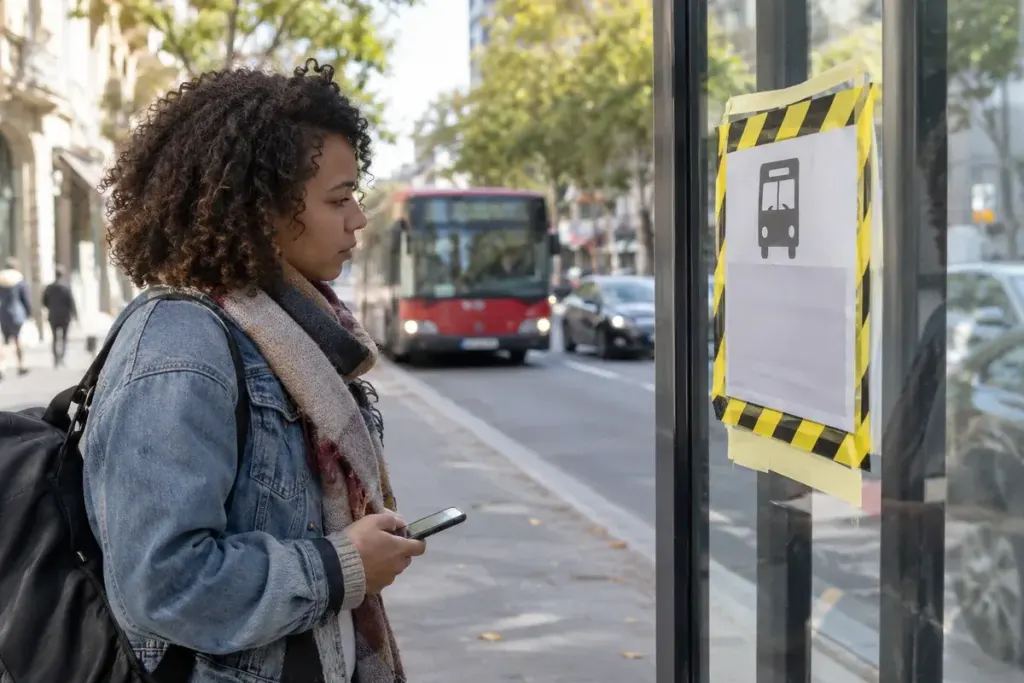
A photograph of a bus-stop notice arrives in a neighbourhood chat. The headline says the stop is closed, but the lower corner containing the dates has been cropped out. Sharing it immediately feels helpful. It may instead send somebody walking to a temporary stop that is no longer in use.
Local information becomes useful when it answers a practical question at a specific time. A familiar logo and a convincing photograph are only the beginning of verification.
Recover the missing details
Look for the route, stop name or identifier, direction of travel, start and end dates, and the replacement arrangement. Two stops with similar names can serve opposite directions. A notice about one evening’s roadworks may not apply the following morning.
Ask for the complete notice if the image is incomplete. Keep the original wording available while you check it; rewriting from memory can accidentally turn “after 20:00” into an all-day closure.
Go to the organisation responsible
Open the transport operator or municipality’s own website through a known address. Search by route or stop, not just the most dramatic words in the message. As an example of this type of source, Transport for London’s bus status page supports route and stop enquiries. For a different city, use that city’s responsible operator rather than assuming a third-party map is current.
If the official page fails to load or displays an outdated-data message, that is an information gap. It is not evidence that no disruption exists. An official service contact may be the next useful route, especially when someone depends on an accessible boarding point.
Share an action, a source and a time
A helpful message could say: “The eastbound stop named on this notice is temporarily closed on the stated dates. The operator lists this replacement stop. Checked this morning; see the official notice before travelling.” Fill those details only after confirming them.
Include the direct source link rather than only a screenshot. Keep accessibility information and walking directions faithful to the official notice. Do not promise that a replacement route is step-free unless the responsible source confirms it.
Correct the same audience
If the arrangement changes, update the original thread and make the correction easy to spot. Quietly deleting your earlier message may leave forwarded copies circulating without context. State what changed and when you checked again.
This approach works for library closures, water-service notices and waste collections too. The useful habit is to distinguish an announcement’s existence from its present applicability. Neighbours need the version that helps them make today’s journey, not merely the most widely shared image.