
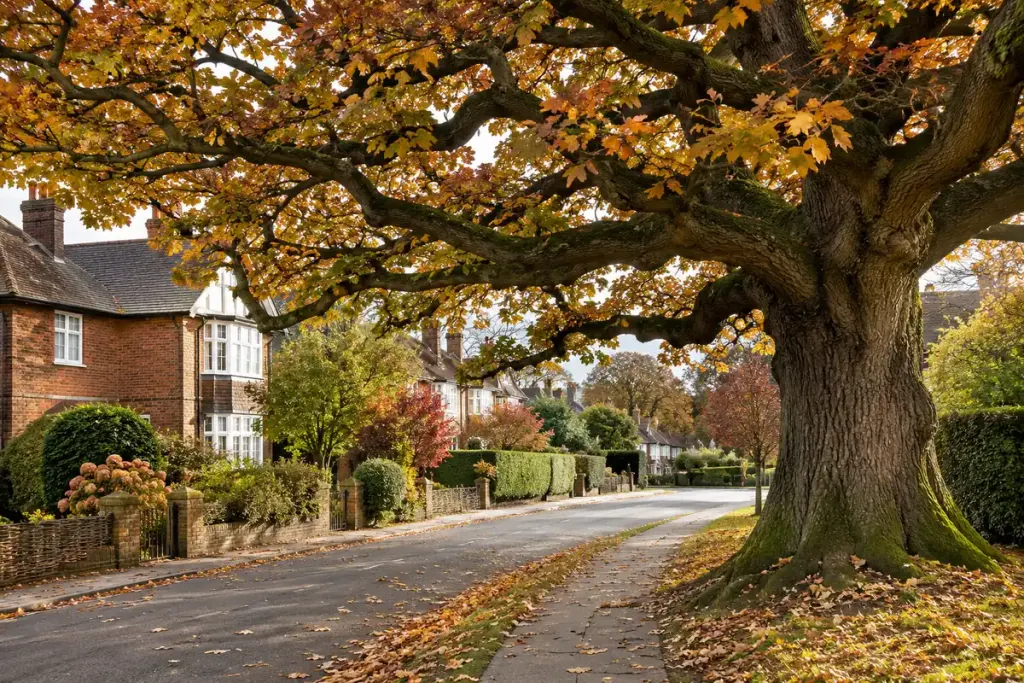
A large tree can be privately owned and still be subject to public planning protection. In England, a Tree Preservation Order, usually shortened to TPO, is one mechanism a local planning authority can use to protect specified trees, groups or woodland.
The government’s TPO guidance explains the protected activities and the consent process. Ownership and permission to carry out work are separate questions. A boundary fence or a neighbour’s preference does not settle both.
Check the record before booking the work
Contact the local planning authority with a clear location, preferably an address and a marked plan or photograph. Ask whether a TPO applies and whether the tree is also in a conservation area. An online map can help you begin, but uncertainty about a boundary or the identity of a tree needs clarification.
Describe the proposed work precisely. “Tidy the tree” could mean very different things to the owner, contractor and council. A competent arborist can help specify work in terms that can be assessed.
Do not treat an apparently dead branch or a worrying lean as an automatic permission to carry out any work you choose. There are exceptions and procedures for particular circumstances, but they should be checked with the authority and an appropriate professional. Immediate danger needs an appropriate urgent response.
Make a useful enquiry
A concise message might say: “I am enquiring about the tree shown on the attached plan at this address. Please confirm its protection status and the process for the proposed work described below.” Add contact details and avoid making unsupported claims about disease or structural safety.
If the tree belongs to someone else, make that clear. Reporting a concern does not give you authority to commission work on their behalf.
Keep the response and any consent conditions with the contractor’s specification. Permission for one described operation should not be expanded informally on the day because another cut seems convenient.
This is an introduction to the English process, not legal advice about an individual tree. The practical habit is straightforward: identify the tree, establish its status and obtain the right advice before the tools arrive.