
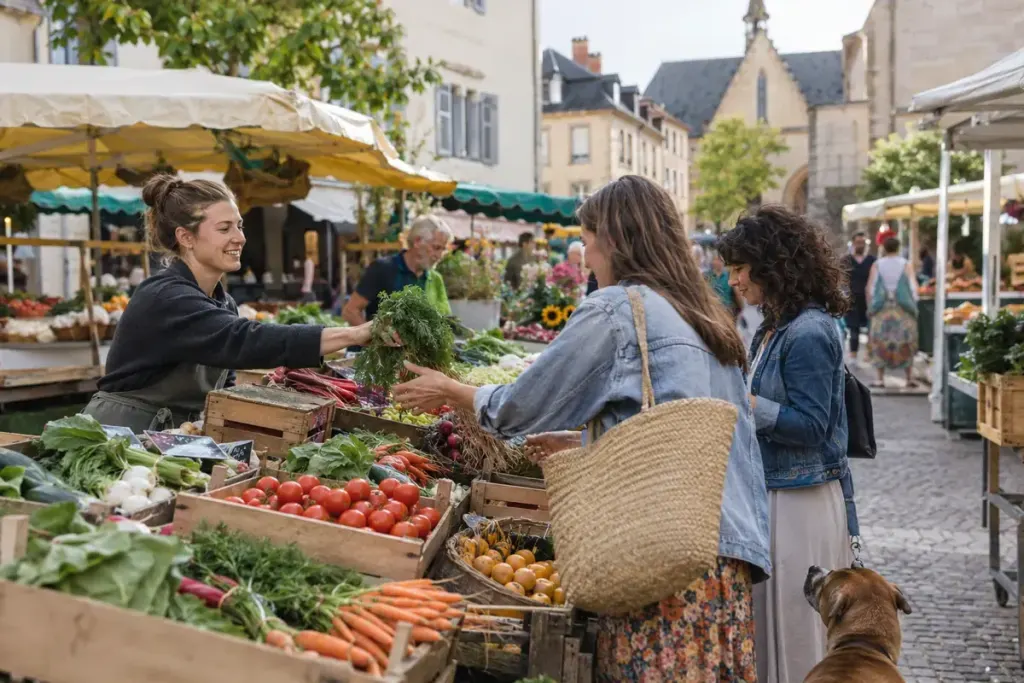
A market can be a good place to understand a town, but it is first a place where people work and shop. Arriving with a little curiosity and a little restraint makes the visit more useful than collecting a quick photograph of colourful stalls.
Start by checking the market’s current days, location and any seasonal changes through the organiser or local authority. A permanent market hall and a weekly outdoor market may share a name without sharing opening times.
Let a purchase lead the conversation
Choose something you genuinely want to buy, then ask a specific question when the trader is not busy. “How is this usually prepared?” or “Is this grown nearby or brought in?” invites information without assuming that everything on the stall is local.
Listen for distinctions. A seller may grow some produce and buy other stock wholesale. A food associated with the region may use ingredients from elsewhere. Those details make a better account of the market than a sweeping claim about authenticity.
If you plan to write about the visit, record names and descriptions accurately and ask before attributing a personal story. Do not turn an informal chat into a quotation without making your purpose clear. Ask permission before photographing a person or their stall at close range.
Notice the practical neighbourhood role
Look at who uses the space, where people pause and how deliveries, queues and walking routes coexist. Keep observations separate from conclusions: seeing several older shoppers does not prove that the market serves only older residents.
A short field note might contain the date, market section, one product question and one feature you want to understand better. Avoid recording strangers’ private conversations or personal details.
Before leaving, check how to carry and store anything you bought, particularly perishable food. A worthwhile visit can end with a modest purchase, a clearer understanding of one ingredient and a reason to return. It does not need to turn the entire market into a spectacle.