
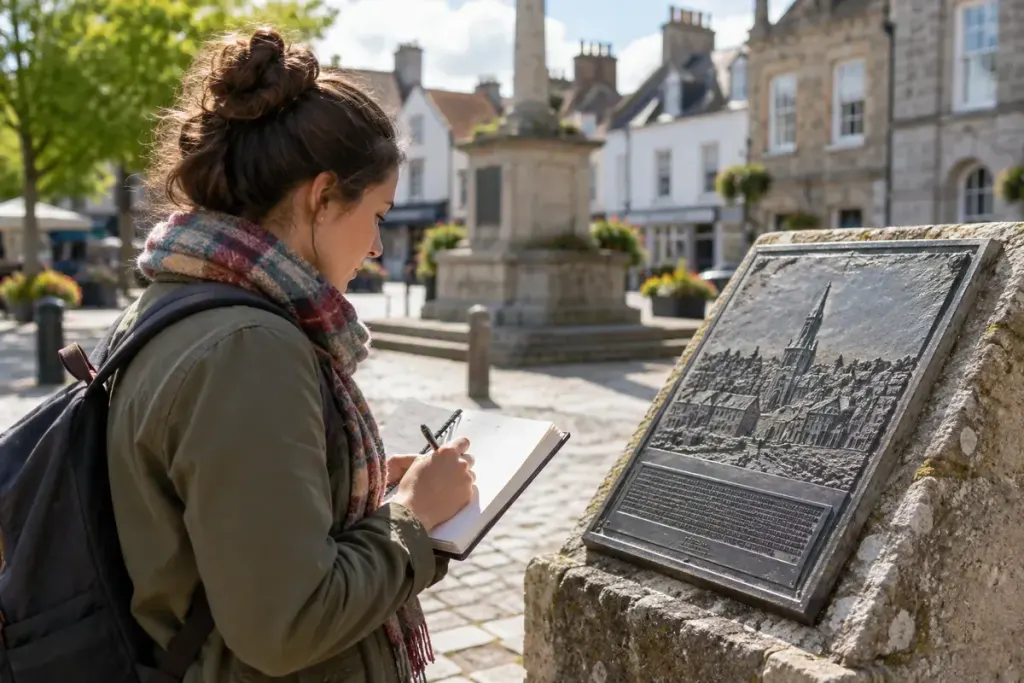
A plaque beside an old building looks authoritative because it is fixed in place. Yet it is still a piece of writing, created at a particular time by someone choosing which part of a longer history to explain.
When exploring Subotica or another city, photograph the whole plaque if photography is allowed. Include the commissioning organisation, date, language and any small print, not just the most striking sentence. Those details help you understand the statement later.
Two dates may describe two different events
A building’s construction date and the plaque’s installation date are not interchangeable. A memorial added decades later records a later act of remembrance as well as the earlier event. If a date appears without explanation, note the uncertainty instead of silently assigning it a meaning.
Pay attention to verbs. “Born here,” “lived here,” “worked here” and “associated with this site” make different claims. A restored facade may stand on a site with older associations, but that does not prove every visible part dates from the event being commemorated.
Use the wording as a research lead
Write down names exactly, including accents and alternative spellings. For a multilingual plaque, compare the versions cautiously; a shorter translation may omit detail rather than contradict it. If you do not read a language confidently, label a machine translation as provisional.
Next look for the named institution’s catalogue, a municipal heritage record or an archival document. A tourism summary can help locate a place, but tracing the claim to a more specific source may reveal a date range, disputed attribution or later alteration.
End your walk with a distinction between observation and interpretation. You observed a plaque making a particular claim. Whether that claim is fully supported is a separate question. This approach makes local history more interesting: small gaps become questions to investigate rather than details to fill with confident guesses.