
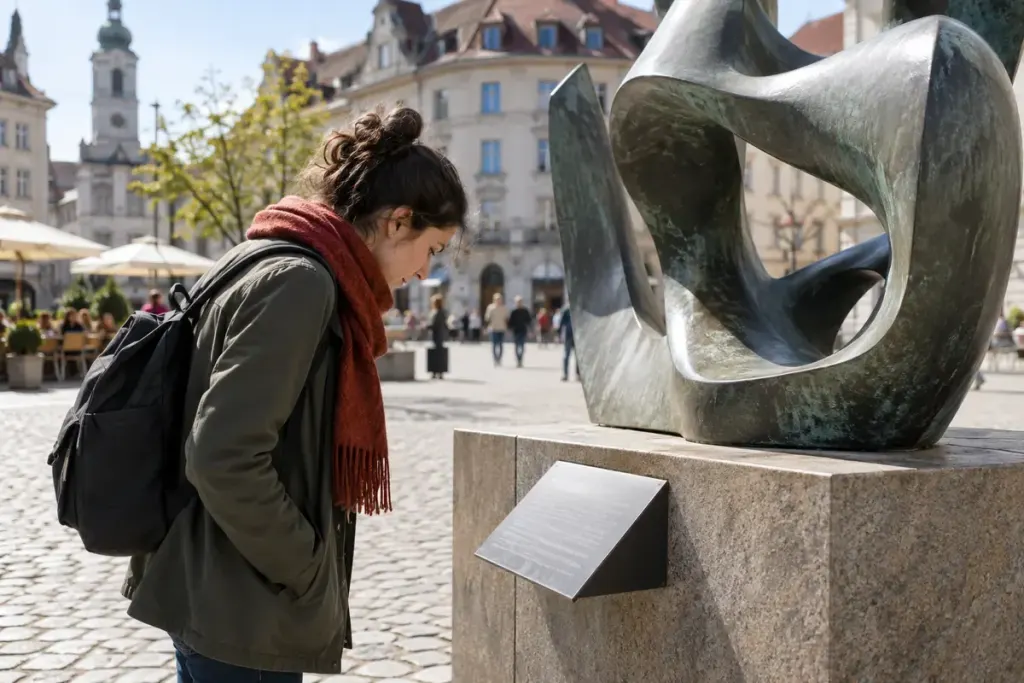
A name appears beneath a sculpture, and someone assumes it belongs to the artist. It may instead identify a donor, a person commemorated or the organisation that paid for installation. Reading the small words around the name can change the whole story.
On your next walk, choose one publicly accessible artwork and record the credit carefully. Include the title, dates, names and the exact role attached to each name. Photograph the plaque from a permitted position if helpful, while keeping a note of where you found it.
Separate creation from later care
An artwork can have several relevant dates: creation, installation, relocation and restoration. A plaque added during a restoration may be newer than the work itself. Avoid turning the most visible date into a claim about when the artist made the object.
Likewise, a municipal collection entry may identify a commissioner or fabricator as well as an artist. These roles can all matter. Keeping them separate gives proper credit and makes it easier to understand how the artwork reached the public space.
Build a small evidence trail
Search the municipality’s cultural records, the owning institution’s collection catalogue or the artist’s own documentation. Match the work by title, location and image rather than a familiar surname alone. If two records disagree, retain both references and describe the discrepancy.
An illustrative caption might read: “The plaque credits the sculpture to one artist and records a later restoration funded by a local group.” It should not turn that funding credit into authorship. If the artist is not identified, saying so is more accurate than guessing.
Before posting photographs online, check relevant venue rules and local rights requirements. Public visibility does not settle every question about reproduction or commercial use.
A careful caption can remain short. The value lies in distinguishing the people involved, retaining the source and leaving unknown details open. That makes your neighbourhood observation useful to the next person who tries to follow its history.