
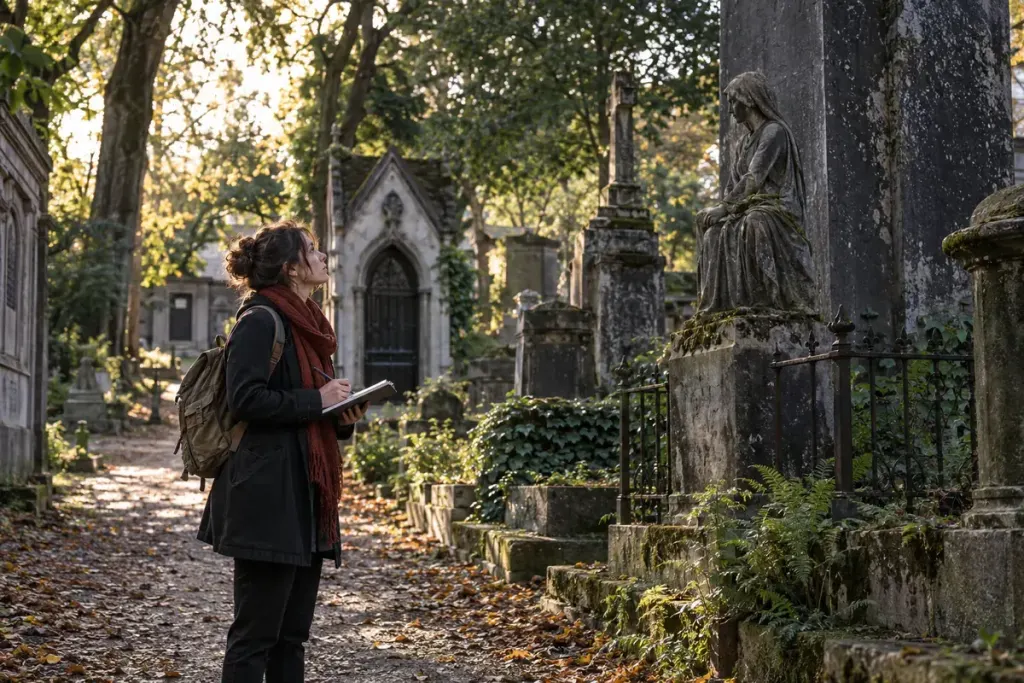
A carved flower, a broken column or an unfamiliar set of initials can make a cemetery feel like a book written in symbols. The temptation is to give every mark a single meaning. A more reliable visit begins with description and leaves interpretation open until there is supporting evidence.
Check visiting rules and remain on permitted paths. A cemetery may be a historic site and an active place of mourning at the same time. Give services and private visitors space, and follow restrictions on photography.
Write down what is actually present
Record the inscription as accurately as you can, including uncertain letters. Note the material, shape, location and neighbouring memorials without assuming that proximity proves a family relationship. A photograph can supplement your notes, but angled light and weathering may change what seems legible.
Do not rub, chalk, clean or move a memorial to make the lettering clearer. Those actions can damage vulnerable surfaces or violate site rules. Ask the caretaker or relevant archive whether a transcription or burial register already exists.
When you encounter a symbol, create two separate entries in your notebook: “visible feature” and “possible interpretation.” For example, describe a carved branch before deciding which plant it represents or what the family intended it to signify.
- Check the site’s own guide or catalogue.
- Look for a dated burial or memorial record.
- Compare the inscription with other independent records.
- Keep unresolved details explicitly uncertain.
Language and spelling may reflect the period, the stonecutter or later repairs. Avoid modernising a name in your transcription without preserving the original form. If translating, distinguish your translation from the wording on the stone.
A thoughtful account can say that a symbol’s meaning is unclear. That honesty often opens a better question about local craft, family memory or religious practice than a confident explanation copied from a universal symbol chart.