
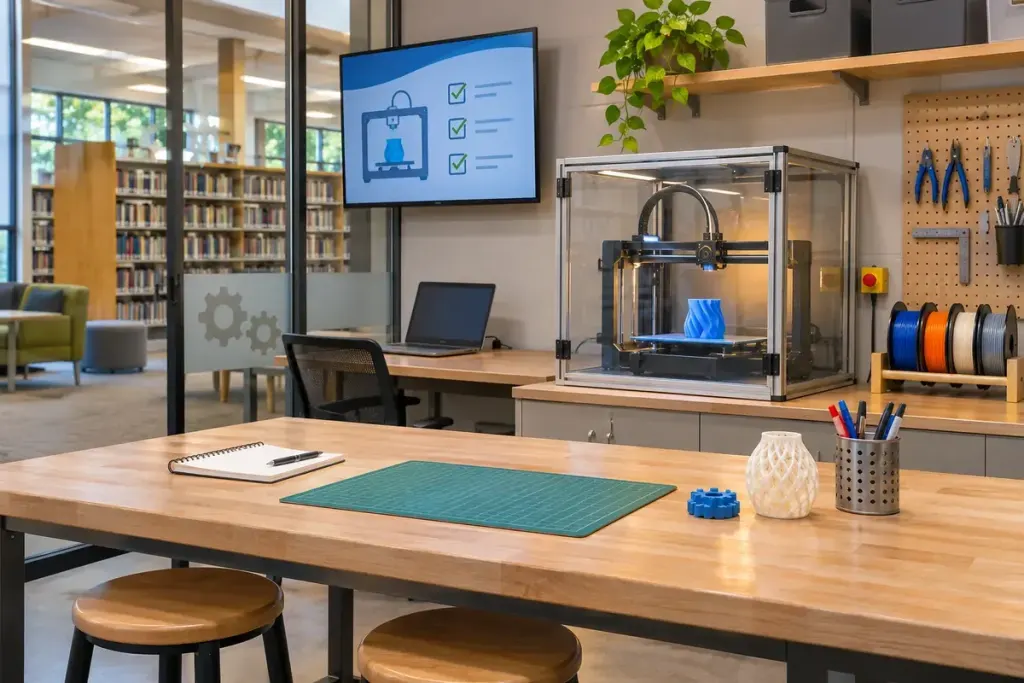
A library membership can open the door to a makerspace without automatically authorising use of every machine inside it. A 3D printer, laser cutter or other specialist tool may have its own induction, booking conditions and supervision requirements.
For a concrete example, the State Library of Queensland’s guide to The Edge explains how to get started with its facilities. Its arrangements demonstrate why checking the local service’s instructions is more useful than assuming all library makerspaces work alike.
Ask what the induction unlocks
Before travelling, confirm whether training is specific to a machine, whether a library account is needed and how equipment time is reserved afterwards. Ask about age requirements, accessibility support and any charges for materials or use.
Bring a modest first project. A small test piece with a clear purpose is easier to discuss than a complicated finished object with unknown material requirements. Explain what you want the object to do, not just what you hope it will look like.
Separate file preparation from machine access
In a fictional visit, a participant arrives with an image and expects to cut a complete sign immediately. The induction might instead cover safety and basic operation, while the file still needs preparation. Asking in advance which formats are accepted avoids spending the session discovering that mismatch.
- Which software or file types does the equipment use?
- Must materials be supplied or approved by the library?
- Can staff help prepare a file, or only operate the machine?
- What happens if a job runs longer than the booking?
After the session, keep your own notes about the approved workflow and the next booking step. Do not treat induction as permission to bypass supervision or use an unfamiliar material. A successful first visit can be a safe test and a better project plan, even if you leave without a finished object.