
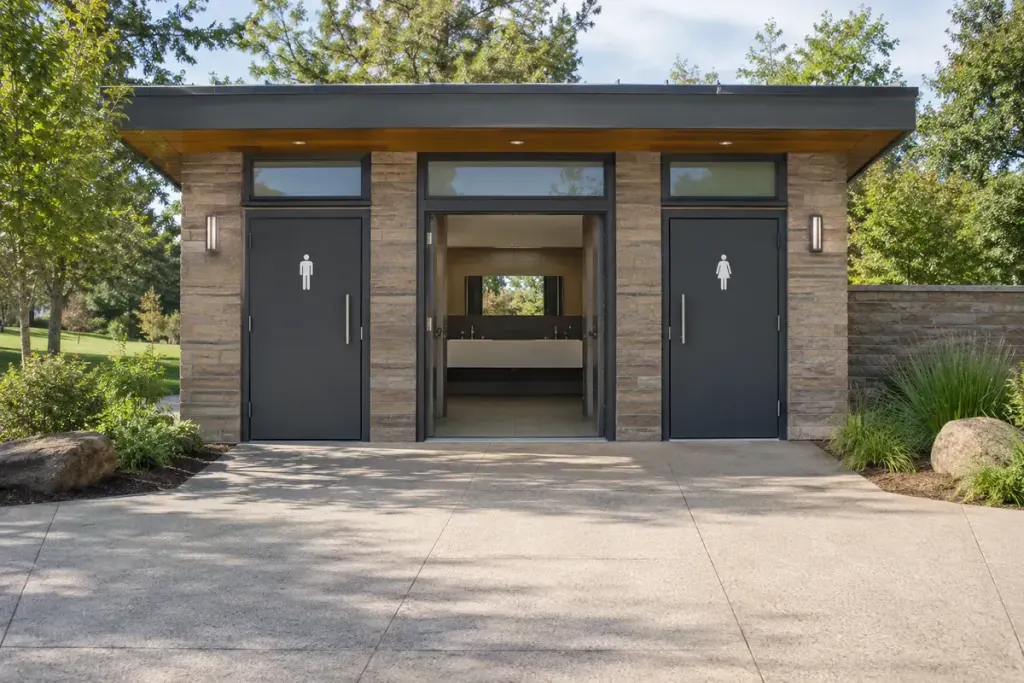
A map pin tells you where a public toilet is supposed to be. It does not tell you whether the door is open, whether payment is required or whether the entrance is reached by steps. Those missing details can turn a simple stop into a difficult detour.
For a local information page, usefulness comes from describing the actual visit. Treat each detail as something to verify, with a date, rather than filling gaps from a photograph.
Describe the entrance, not just the address
Record the entrance location in plain language: inside a building, beside a particular public entrance or reached from a named street. If a visitor must pass through a business, establish whether use is restricted to customers.
Check opening hours with the operator and distinguish them from the surrounding building’s hours. Seasonal schedules, maintenance closures and special events can change access. A listing should say when its information was last checked and how readers can report a change.
Keep facilities specific
Instead of writing “fully accessible” from appearance alone, describe verified features and name the source. Relevant questions may include step-free access, door arrangements, transfer space and whether a key or staff assistance is needed. Use the operator’s documented accessibility information when available, and flag anything not confirmed.
Baby-changing facilities, an adult changing place and an ordinary larger cubicle are different provisions. Do not substitute one label for another. Similarly, state the payment method only after checking it; a coin symbol in an old photograph may no longer reflect the service.
Build a listing that can be maintained
A practical entry can contain the entrance description, verified hours, fee or access conditions, facility details, operator contact and check date. Keep uncertain information visibly separate from confirmed observations.
For an illustrative update, “Door closed during a visit on Tuesday afternoon; operator confirmation pending” is more honest than declaring a permanent closure. One visit establishes what happened then, not every future opening time.
Photographs should avoid people using the facility and any personal information. Focus on the public entrance and useful wayfinding details where photography is permitted.
A good listing reduces uncertainty before someone travels. The map pin remains useful, but the checked access details are what make it dependable.