
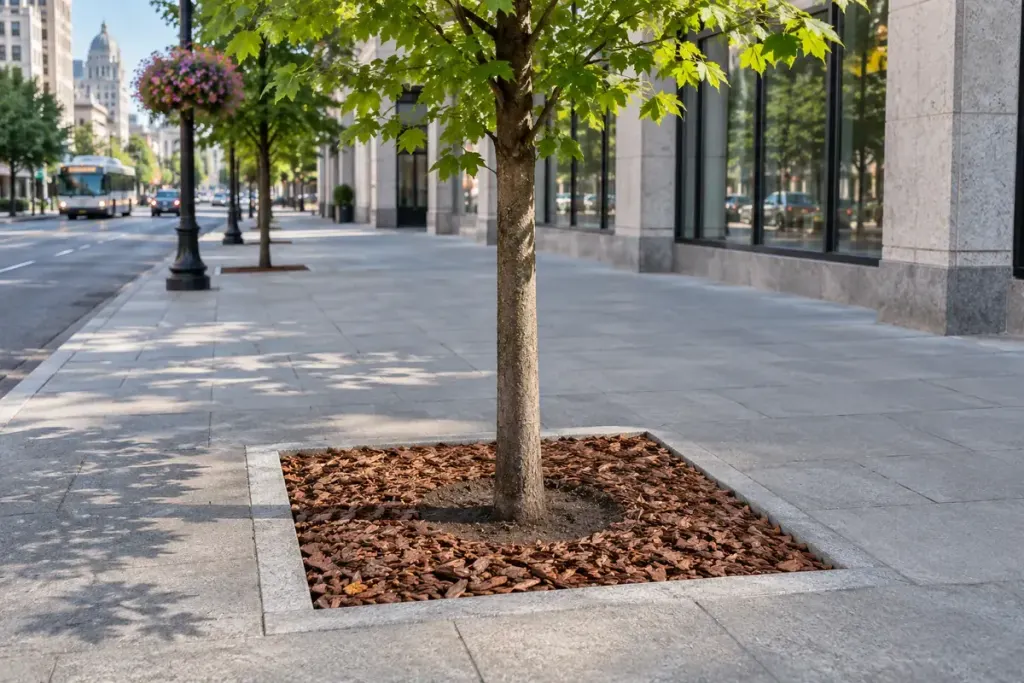
A bare square of soil around a pavement tree can look like an invitation to redesign it. Yet the tree, its roots, the surrounding walking route and the underground services all share that small space. A well-meant weekend project can affect more than its appearance.
Start by finding the local authority’s guidance for street-tree care. Routine litter collection may be encouraged while planting, adding a guard, altering paving or excavating requires permission. New York City’s street-tree planting standards illustrate how detailed those requirements can be. They are a city-specific example, not a rulebook for every neighbourhood.
Write down the job before collecting tools
A simple care note can name the tree location, the responsible authority, the permitted tasks and the contact for a damaged branch or raised pavement. For a shared effort, add who will water during a dry period and who will check whether the soil actually needs it. Avoid several neighbours independently giving the same tree extra water.
The New York State urban-tree guide warns against mulch touching the trunk or burying the trunk flare. That is a useful reason to resist the neat-looking mound sometimes built around a tree base. Water needs also depend on the tree and site; a fixed bucket count copied from another climate is a poor substitute for local advice.
Leave roots, trunk fittings and structural pruning to the appropriate professionals. Do not attach signs, wire or decorations to the tree simply because your group is helping with its surroundings.
Keep the pavement part of the plan
Stand back and look at the walking route after any authorised work. Bags of mulch, protruding edging and an abandoned watering container can create a new obstacle even when the planting looks better.
Photograph the agreed condition and report problems through the proper channel. A modest, repeatable care routine is easier for neighbours to maintain than an attractive installation whose ownership and upkeep nobody has settled.