
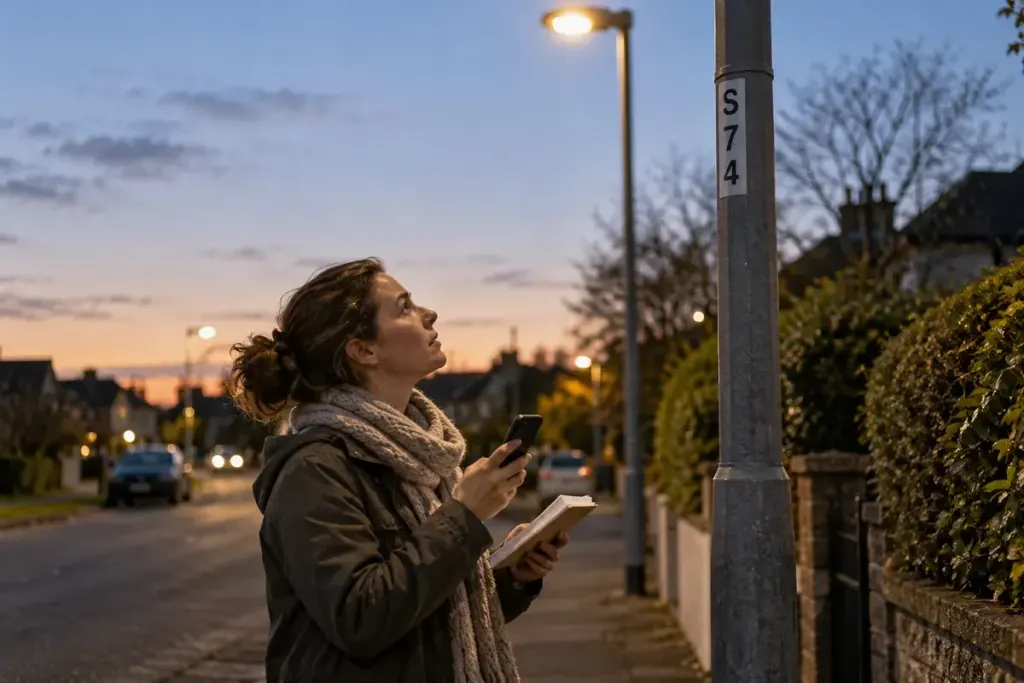
“The lamp near the shops is broken” may describe several lights to the person receiving a report. A precise location and a simple description of the fault can make the report easier to route to the responsible service.
Identify it from a safe place
From the pavement or another safe public position, note the street, nearby junction and side of the road. If a pole identification number is visible without approaching a hazard, include it. A map pin and a recognisable nearby address can help when there is no readable number.
Do not climb, open a panel or touch damaged equipment. Exposed wiring, a fallen pole or an immediate danger needs the local emergency or urgent hazard-reporting route, not merely a routine lighting form. Keep away and follow local instructions.
Describe the behaviour
Is the light completely out, flickering, on during daylight or repeatedly switching off? Record when you observed it and whether neighbouring lamps were working. Avoid claiming it has failed for weeks unless you have actually observed that period.
A useful fictional report reads: “Lamp on the east side of Market Street, beside the entrance to number 24, not lit at 20:15 on Tuesday. The lamps on either side were on. Pole number visible from the pavement: 118.” Replace those details with your own observations.
Use the official local authority or service provider’s reporting page. Responsibility can differ between public streets, private estates and car parks. Check that you are reporting to the correct organisation rather than posting personal contact details on an unrelated social page.
Keep the reference number and the stated response process. If you add information later, attach it to the existing report where possible. A report is not proof that a repair is scheduled, so describe its status accurately when updating neighbours. Clear observations help; repeated speculation about the cause usually does not.