
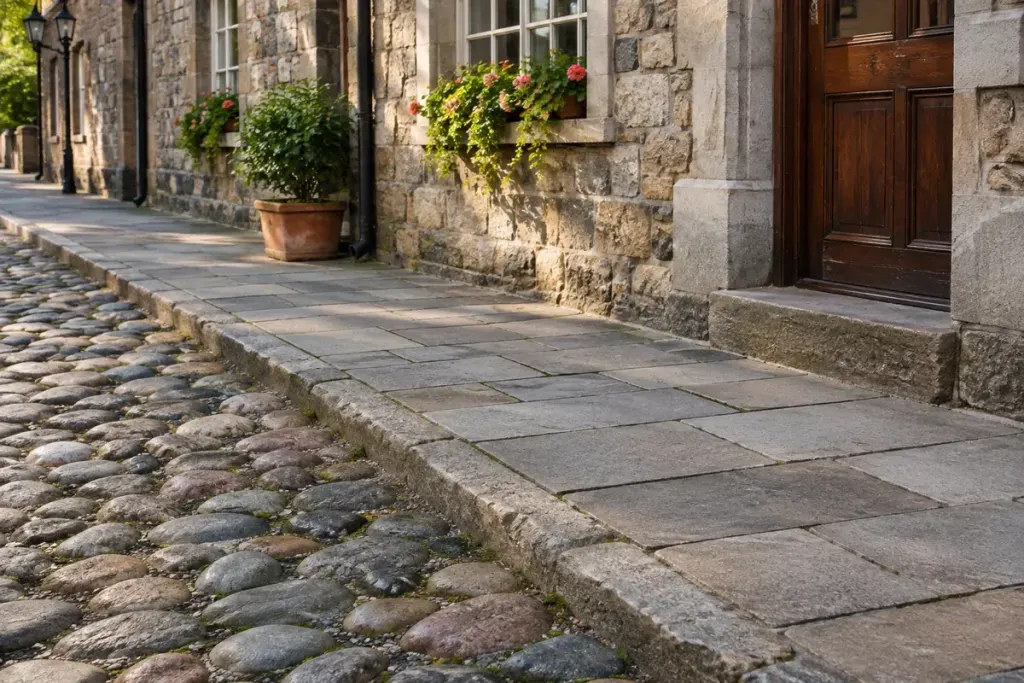
Almost any old stone street may be called “cobbled” in conversation. Looking more closely often reveals a different surface: rows of stone blocks with worked faces, commonly described as setts. The distinction helps turn a pleasant street scene into a more precise observation.
In broad terms, cobbles are naturally rounded stones, while setts are shaped stone units laid as paving. Weathering, wear and regional vocabulary can complicate the appearance, so a quick glance should not become a confident claim about material or age.
Start with shape and arrangement
From a safe public position, look at the outlines of individual stones. Are they rounded and irregular, or do they form roughly rectangular units? Notice rows, curves, changes at the gutter and patches around utility covers.
Photograph a small detail and a wider view. The detail records the stone and joints; the wider view shows where the surface sits in relation to kerbs, entrances and buildings. Neither requires removing material or disturbing a joint.
Historic England’s record for Charterhouse Square provides a useful documented example. It distinguishes earlier cobbled surfaces from the granite setts visible in later photographs and relates the surviving paving to nineteenth-century resurfacing. The dating comes from evidence, not merely from the stones looking old.
Look for a sequence of changes
A narrow strip of different paving might mark a repair, an altered boundary or a later service trench. Those are possibilities to investigate, not conclusions to place in a caption immediately. Historic photographs, municipal records and conservation documentation may explain the change.
For a local walk, make a simple record with four fields: location, visible material, arrangement and unanswered question. “Regular stone blocks beside a later-looking patch; date unknown” is a useful observation even before the archive search begins.
Accessibility belongs in the record too. Unevenness, gaps and changes in level affect how people use a street today. Appreciating a historic surface does not require overlooking those experiences.
Use precise language without losing the story
When sharing a photograph, explain what you can see before proposing an age or origin. A surface may have been relaid, repaired or made from reused stone. Learning the difference between cobbles and setts gives you better questions; the local evidence supplies the history.