
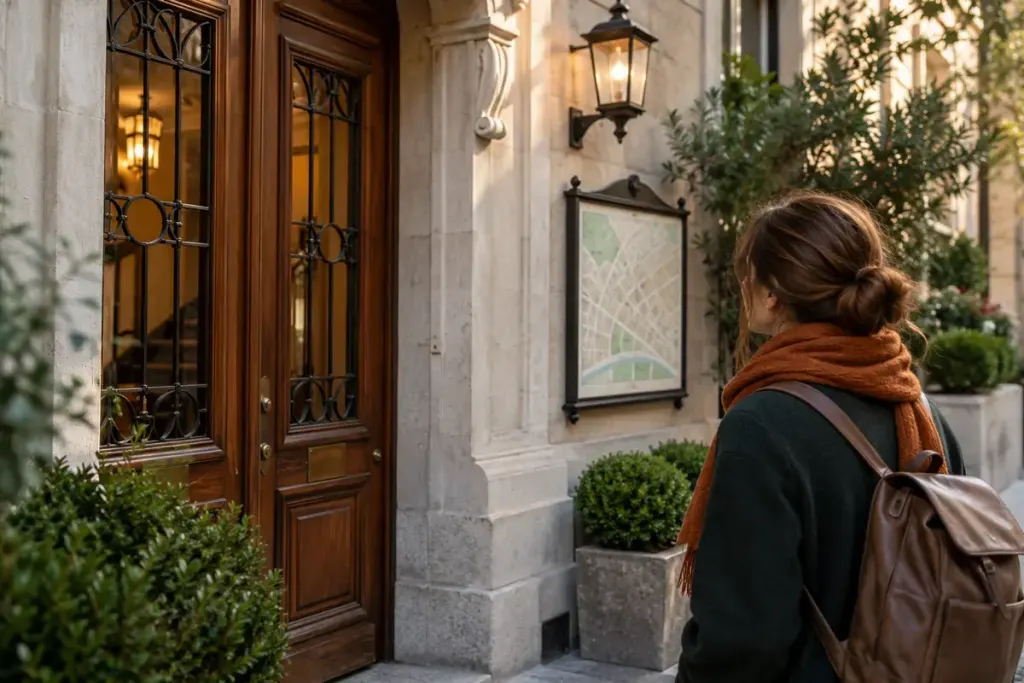
The address is correct, but the door facing the street is locked. A notice points around the corner, where a second entrance leads to reception. For someone attending an appointment or community meeting, that missing detail matters more than another sentence praising the building.
When writing a local guide, separate the postal address from the entrance a visitor should use. Confirm the information with the venue and, where possible, check the approach in person during the relevant opening hours.
Describe the last part of the journey
A useful instruction might say, in a fictional example, “The public entrance is on the side street, beside the library return box; reception is through the glass doors.” Use landmarks that are reasonably stable and visible from the direction visitors approach.
A parked van, temporary banner or shop display may disappear. If your instruction depends on one, replace it with a more reliable reference or explain that the arrangement is temporary.
Do not send visitors through a service yard or staff-only door because it appears closer on a map. Check the permitted public route and any gates that close outside staffed hours.
Include the access details people need to choose
Ask the venue about steps, slopes, lifts and alternative entrances. Describe the confirmed arrangement without declaring a route suitable for everyone. A step-free door is only part of a journey that may include a difficult surface or an unstaffed gate.
- Name the street or side of the building.
- State whether a bell, reception desk or booking is required.
- Explain any difference between daytime and evening entry.
- Include a contact route for uncertain or changed arrangements.
For a shared building, identify the organisation and floor as well as the building name. Several services can use one address while having different reception points and hours.
Date your check and remove old instructions when the entrance changes. If you publish a photograph, avoid capturing identifiable visitors unnecessarily and obtain any required permission. A simple, current approach description helps a local information page do its most practical job: getting people to the right door.