
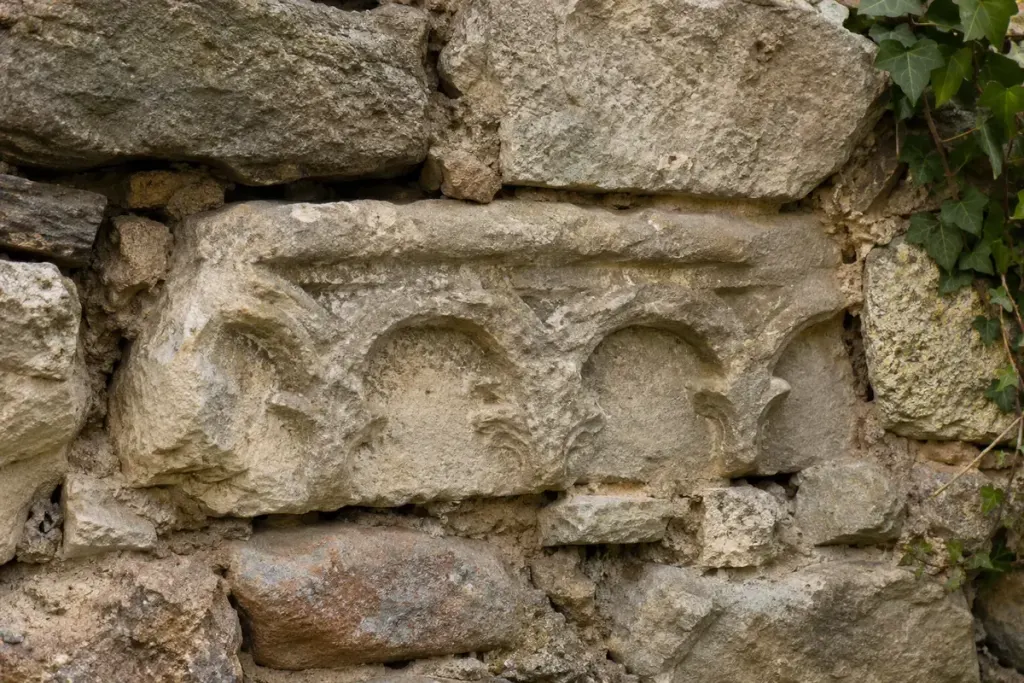
A carved block appears sideways in a plain wall. A column seems older than the doorway beside it. Such details can make a walk through a historic neighbourhood more interesting, but appearance alone does not establish where the material came from.
Architectural reuse can bring older building elements into a later structure. Art historians often use the term spolia for such material. Smarthistory’s discussion of Santa Sabina in Rome provides a documented example involving reused ancient columns. It shows how the history of a component may differ from the date of the building around it.
Make an observation before making a story
Start with what can actually be seen: a different stone colour, an interrupted carving, an inscription facing an unusual direction or a mismatch between adjacent blocks. Photograph the wider wall as well as the detail, where photography is permitted. The surrounding arrangement may matter more than a close crop suggests.
Then look for a conservation report, museum explanation or building history. Reuse is one possibility; later repair, replacement stone and deliberate imitation are others. Even a genuinely ancient fragment does not prove that a complete earlier building once stood on that exact spot.
A useful notebook entry might read: “Carved block beside the north entrance; carving partly concealed; origin not yet established.” That leaves room for evidence instead of turning a first impression into a local legend.
Ask where the interpretation comes from
If a guide identifies a reused piece, ask whether the account is based on an inscription, archaeological work, archival records or a traditional explanation. These are different kinds of support.
Do not scrape mortar, move fragments or enter restricted areas to investigate. Publicly accessible details, a good photograph and a well-framed question can already reveal how a building accumulated changes. The most rewarding discovery may be learning which parts of its story are still unresolved.