
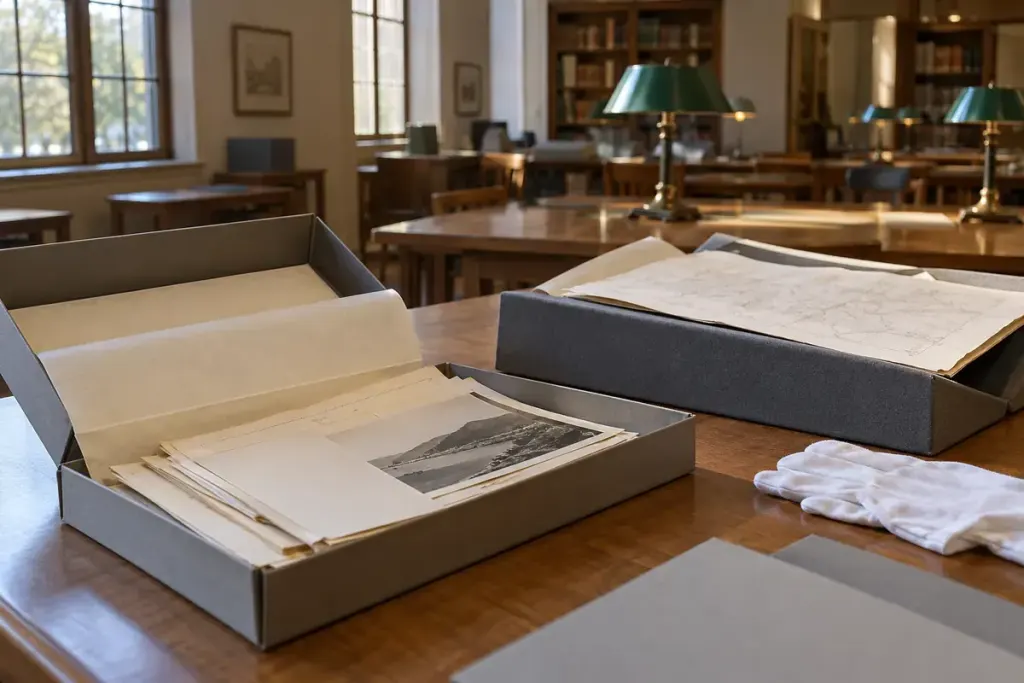
You photograph a letter about a neighbourhood building and later remember the sentence perfectly. Unfortunately, the image shows neither the folder reference nor the page number. The quotation may be accurate, but another reader now has no reliable route back to it.
The National Archives’ citation guidance emphasises the repository and full catalogue reference, with further item details where appropriate. Each archive has its own conventions, so follow the institution holding the material.
Keep a citation beside the observation
Record the archive’s name, collection or series, full item reference, document date and the relevant page or folio. If the document has no page numbers, ask the archive how it should be cited rather than inventing a numbering scheme that nobody else can reproduce.
For online material, retain the catalogue link and access date as well. A downloaded image filename is helpful for your own organisation, but it may not be the archive’s stable identifier.
Distinguish the catalogue from the document
A catalogue description summarises or identifies an item. It is not always the same thing as reading the item itself. If you have only seen the description, say so. Do not turn a catalogue date range into a precise date for an event without checking the evidence.
A practical note can use three lines: “Source details,” “What the document says,” and “My interpretation.” This keeps a tentative conclusion from becoming part of a supposed quotation when the notes are copied into a draft.
Before publishing a photograph or substantial reproduction, check the archive’s permission and copyright requirements. A good citation identifies a source; it does not automatically grant every right to reuse it.
Complete the reference while the folder or catalogue entry is still in front of you. The few extra moments can save a much longer search and allow your local-history story to remain open to verification.