
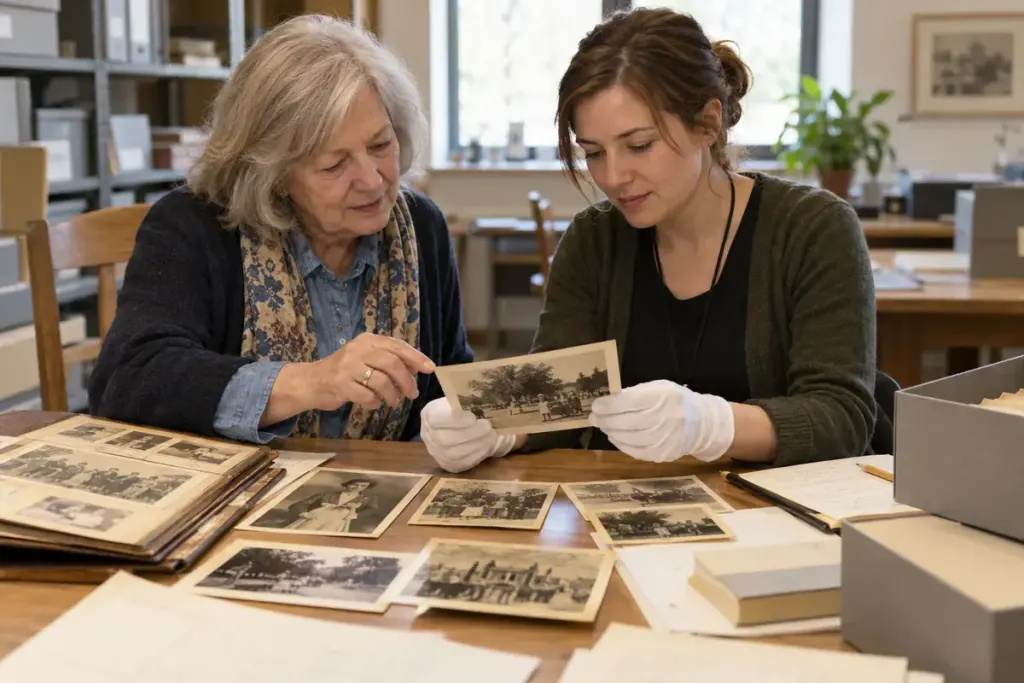
A photograph of an ordinary street can become a valuable record of shops, clothing and daily life. Yet an archive may struggle to use it if nobody can identify the street, the people or the approximate date. Before offering a family photograph, collect the information that still survives around it.
The Society of American Archivists’ guidance for family records asks donors to provide context and explains the role of a deed of gift. It also distinguishes ownership of a physical photograph from ownership of copyright. Local institutions have their own collecting policies and agreements.
Make a companion note
Write down who appears in the picture, where it was taken, who supplied those identifications and how certain they are. “Possibly my aunt, identified by her brother” preserves uncertainty more honestly than turning a family guess into a definite catalogue entry.
Use a separate note rather than experimenting with pens, adhesive labels or cleaning products on the original. If several images belong together, describe their relationship before separating them. An envelope, inscription or sequence may help explain what an isolated photograph cannot.
Ask the archive before sending anything
Contact the institution with a short description and, if requested, a reference scan. Ask whether it accepts originals, digital copies or both; whether the material fits its collection; and what access or publication conditions apply. Do not assume that an unsolicited parcel will automatically be accepted.
For example, a donor might offer a street photograph while retaining a personal digital copy. The conversation should establish what is being transferred and what permission accompanies it. Questions about copyright or sensitive personal information belong in that conversation before an agreement is signed.
A useful donation preserves more than an image. It preserves the chain of explanation that lets a future researcher distinguish evidence, recollection and uncertainty.