
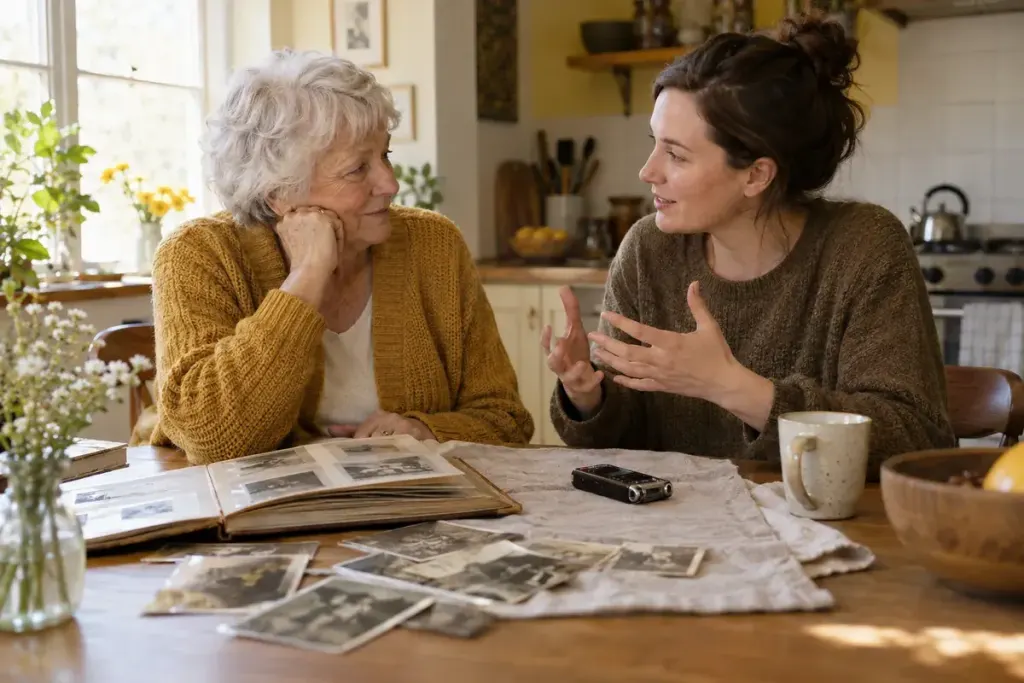
A neighbour remembers the old cinema, a closed factory or a street before the new road. You want to preserve the story, so you reach for a recorder. The most important first question is not about the past: it is what the person understands will happen to the recording.
A conversation can feel informal while producing material that lasts for years. Treat the person’s expectations as part of the project, not an administrative detail to resolve after the interesting stories have been told.
Describe the project in plain language
Explain why you want to record, where the material may appear and who may access it. A private family copy, a school project and a publicly searchable archive create different expectations. Be honest if you have not yet decided how publication will work.
The Oral History Association’s best practices discuss informed consent, expectations and opportunities for narrators to review material before public release where possible. Use appropriate written or recorded agreement for your project, following applicable requirements rather than assuming a casual yes covers every future use.
Agree the boundaries before the recorder starts
Ask whether any topics are off limits and how the person can pause or stop. Clarify whether their name will be used and how corrections or restrictions will be handled. Do not promise that material can be removed from everywhere once it has been publicly copied.
For a hypothetical neighbourhood project, you might agree that the recording stays private until a transcript has been reviewed. That agreement only works if you actually have a process for review and avoid uploading the audio to a public service in the meantime.
Invite a story without supplying the answer
Open questions leave room for an account you did not expect. “What do you remember about arriving for work?” allows more than “Was the factory always busy?” Follow up on a detail the person raises rather than steering every answer toward your preferred narrative.
Keep your own reactions from becoming evidence. If a date sounds surprising, note it for later checking instead of turning the interview into an argument. A memory can be meaningful while still needing comparison with other records.
Preserve context alongside the sound
Record the interview date, general setting, participants’ agreed names and the purpose of the conversation. Keep permissions and access conditions with the project records, stored securely. Name files consistently so an audio clip does not become detached from the agreement governing it.
When making a transcript, mark uncertainty rather than inventing a missing word. Keep the original recording and distinguish a lightly edited reading version from a verbatim transcript. If translating, preserve the relationship between the translation and the original language.
Publish a remembered account as a remembered account
Before presenting a detail as historical fact, compare it with appropriate documents or other evidence. If accounts differ, explain the difference where relevant. Do not combine several people’s memories into an invented quotation from one person.
A good project gives the narrator a clear understanding of participation and gives future readers enough context to interpret the material. The story is not just something you collect. It is something another person has agreed to share under conditions you are responsible for respecting.