
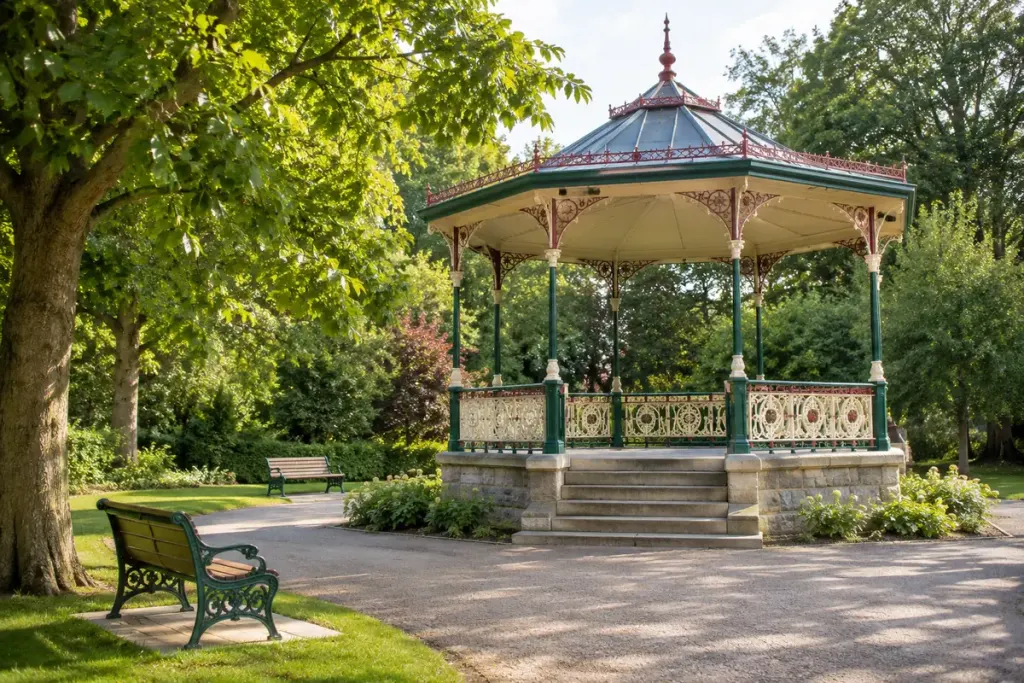
An empty bandstand can look like a decorative shelter. Imagine it with musicians inside and listeners arranged around it, and the park begins to read differently: paths, seating and open ground become part of an audience space.
The introduction to Historic England’s publication on bandstands connects these structures with the history of public parks, organised recreation and musical performance. That wider history is a useful frame, but it does not tell the complete story of a particular bandstand in your town.
Begin with its position
Walk the public route around the structure. Notice whether paths converge there, whether benches face it and how the ground slopes. These observations can suggest questions about gathering and visibility. They do not, by themselves, prove the original designer’s intention.
For example, today’s flowerbeds may occupy space that an old photograph shows filled with chairs. That difference could reflect changing use, a restoration or a temporary event arrangement. The next useful step is to date the photograph and look for a plan or programme, rather than declaring that the park once hosted a particular crowd size.
Look for the people around the building
Local newspapers, concert programmes and municipal records may identify bands, admission arrangements or the organisations that maintained the venue. A recurring Sunday programme tells a different story from a single ceremonial opening. Note whether a source describes a planned event or confirms that it happened.
Keep a simple record with the source, date and the precise claim it supports. “Advertised concert, 14 June” is not the same as “concert attended by thousands.” That distinction makes a local-history account more trustworthy and often more interesting.
Modern use belongs in the story too. A restored bandstand may support different performers, access arrangements or community events from those of its early years. Check the current programme with the responsible organisation instead of treating the building as a museum object that stopped changing.
The rewarding question is not only when the bandstand was built. It is how people have used the space around it—and how the surviving records let us hear a little of that public life again.