
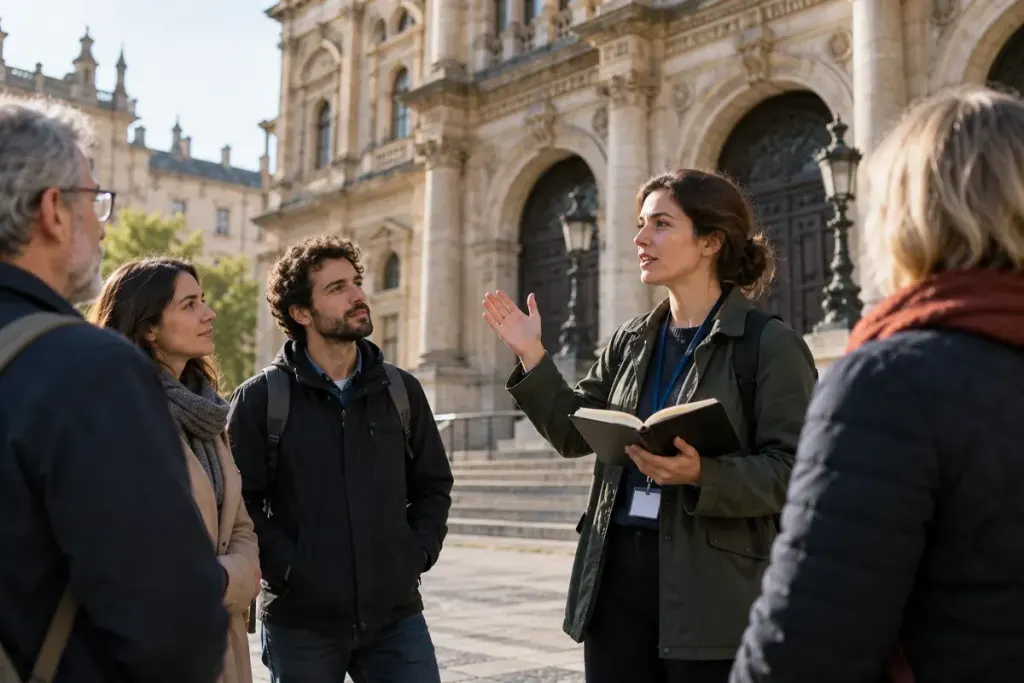
A memorable story can make people stop and look at an ordinary doorway. It can also become a local “fact” simply because guides repeat it. A good walking tour gives visitors a reason to be curious while making the evidence behind its stories clear.
Give every stop a claim sheet
For each location, write the main claim in one sentence. Beside it, record where the information came from: an archive record, a building notice, a published study, an interview or a personal observation. Keep the source date and a page reference or URL where available.
If the story comes from someone’s memory, attribute it with their permission. A recollection can be valuable without being a complete record of events. Do not quietly turn “a former resident remembers” into “this is exactly what happened.”
Use uncertainty as part of the story
Imagine two sources giving different opening dates for a building. One may refer to construction completion and the other to public use. Explain that distinction if the documents support it. If they do not, say the dates differ and leave the question open.
Prepare a short spoken version and a longer source note. Visitors should not have to listen to a bibliography at every corner, but interested people should be able to follow the evidence afterwards.
- Verify names and pronunciations before the walk.
- Check current access and avoid obstructing entrances.
- Separate a visible feature from an interpretation of its purpose.
- Remove a dramatic detail if you cannot support it.
Walk the route at the intended pace before inviting others. A strong historical stop is less useful if the group cannot hear safely or has nowhere appropriate to stand.
After a trial tour, ask which story visitors remembered and what they understood as certain. Their answers may reveal where an entertaining phrase sounded more definite than you intended. Revise that sentence while keeping the curiosity that made the stop work.